Writings by J. R. Sandadi
Reflections on faith, community, and the examined life
Essays drawn from lived experience — interfaith encounters, personal loss, pilgrimage, and the quiet work of remaining whole in a fragmented world.
No spam. Unsubscribe any time.
Latest Essay
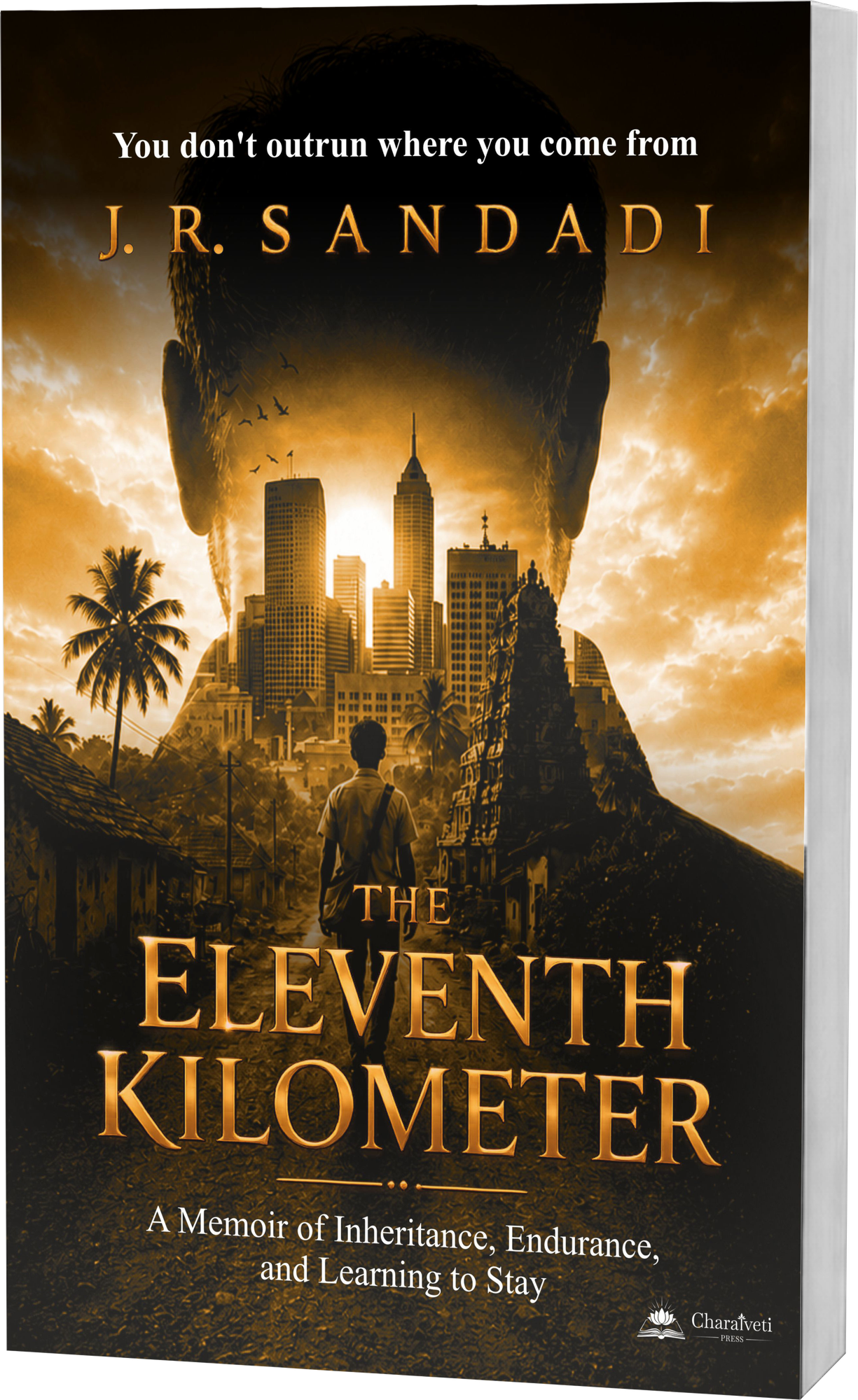
The Enduring Journey of Being Human
A reflection on The Eleventh Kilometer, published in American Kahani
A reflection on The Eleventh Kilometer, considering the memoir's themes of inheritance, endurance, and the discipline of movement — and what they reveal about the larger project of being human.
Read on American Kahani →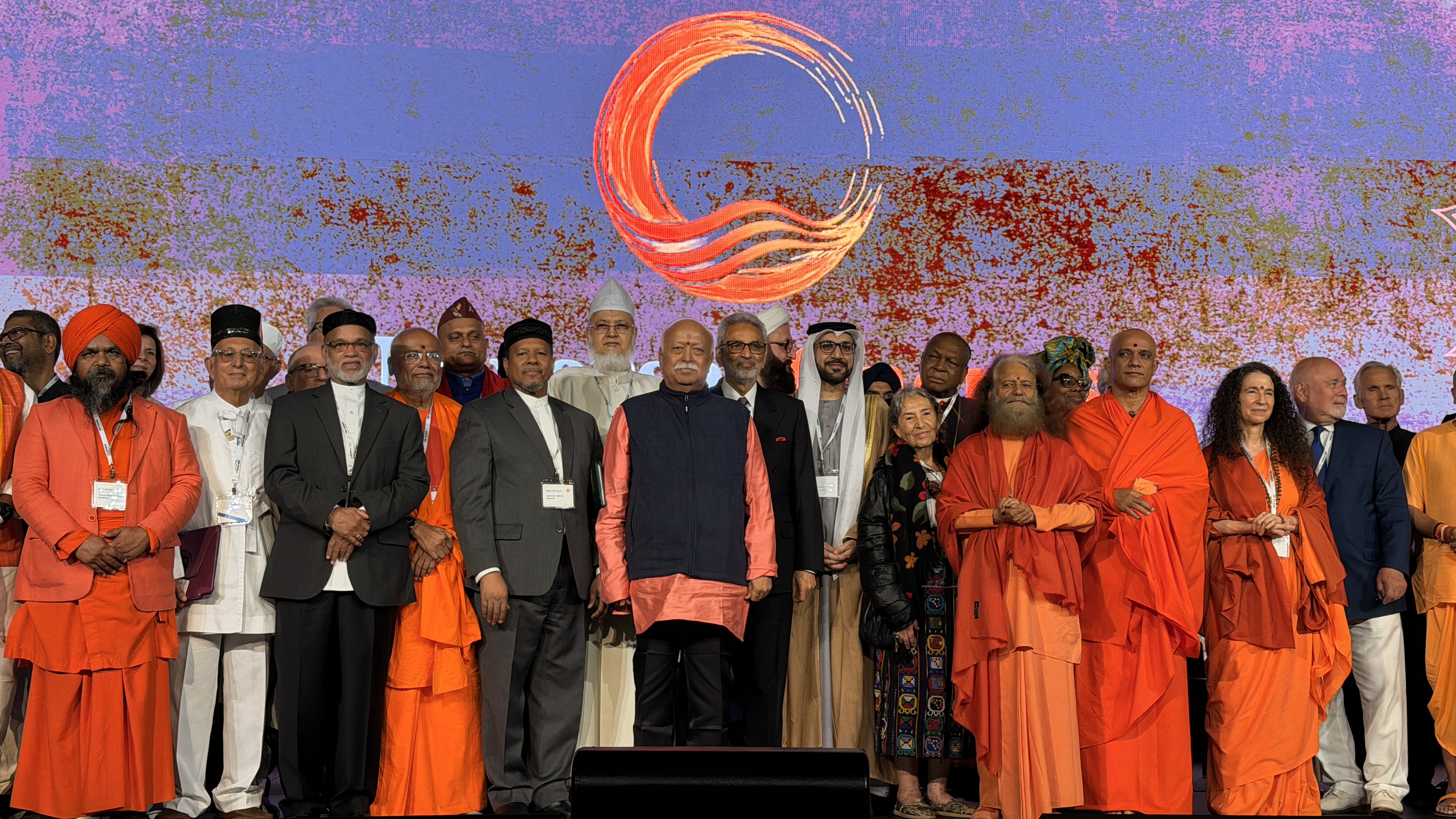
The Word That Stayed Outside
A reflection on Universal Oneness at Madison Square Garden
This past Saturday I went to Madison Square Garden for what I understood to be one of the largest Hindu gatherings in America. Inside, over roughly two and a half hours, I don't recall hearing one word…
Read Essay → 6 min readFaith & Spirituality
When My Soul Becomes Someone Else's Project
On uninvited saviors, the Sanskrit word that never existed, and the quiet dignity of a tradition that never asked to be rescued
I was recently at a panel discussion about religious conversions and persecutions, and it prompted me to reflect more deeply on something many Hindus silently endure but rarely articulate…
Read Essay → 4 min read Faith & SpiritualityGuru Vandana: The Teachers Who Lead Children from Darkness into Light
On an ancient tradition of reverence, the children who carry it across oceans, and what it asks of the teachers who receive it
Every intellectual conversation, in the tradition of those who practice this custom, begins with a prayer to Goddess Saraswati — the feminine personification of all…
Read Essay → 8 min read Faith & SpiritualityWhen the Himalayas Came to Me
On ancient mountains, living masters, and the stillness that finds you when you stop running from it
The Himalayas are not just mountains. They are ancient storytellers, wrapped in robes of snow, whispering truths only the still-hearted can hear. They rise like silent…
Read Essay → 3 min read Faith & SpiritualityExploring the Healing Potential of Devotion and Kirtan: A Personal Journey into Spiritual Transformation
Growing up in a Hindu household in India, I was introduced to the path of chanting in the name of Bhagwan, which is known as the Bhakti yoga path. This tradition has…
Read Essay → 6 min read Faith & SpiritualityThe Hindu Understanding of Charity — From Entanglement to Elevation
In the Hindu worldview, charity ( dāna ) is not merely a noble act — it is a spiritual responsibility. As householders, we naturally engage with the world: earning,…
Read Essay → 3 min read Faith & SpiritualityShiv–Shakti: The Primordial Union of Consciousness and Energy
On the dance of consciousness and energy, the mystery of creation, and the timeless path back to oneness
In the vast tapestry of Hindu philosophy, few concepts capture the essence of cosmic creation and individual spiritual evolution as profoundly as Shiv–Shakti. Rooted in…
Read Essay → 5 min readCommunity & Public Life
The Word That Stayed Outside
A reflection on Universal Oneness at Madison Square Garden
This past Saturday I went to Madison Square Garden for what I understood to be one of the largest Hindu gatherings in America. Inside, over roughly two and a half hours, I don't recall hearing one word…
Read Essay → 6 min read Community & Public LifeFaith and Freedom at America 250
A Hindu American Perspective on Religious Liberty and Democratic Pluralism
On September 11, 1893, a 30-year-old monk from Calcutta stepped to the podium at the Parliament of the World's Religions in Chicago and began with two words: "Sisters…
Read Essay → 8 min read Community & Public LifeMurmuration: A Word That Became a Mirror for Community, Faith, and Shared Purpose
What a poetry reading, a rabbit hole of bird videos, and the science of starlings taught me about how communities truly move
At a recent high tea hosted by the Center for Interfaith Cooperation titled "Power of Women in Faith," a single word from a poetry reading stayed with me: murmuration .
Read Essay → 4 min read Community & Public LifeA Fortunate Bindu: Becoming Dharma Pracharaks
Devprayag, a sacred town in the Garhwal region of Uttarakhand, marks the confluence of two hallowed rivers — Bhagirathi and Alaknanda. Together, they merge to become the…
Read Essay → 3 min read Community & Public LifeBefore You Argue, Prove You Understand
An ancient Hindu practice of understanding your opponent before you speak — and why it may be the most urgent intellectual skill of our time
There is a particular kind of frustration that settles in when you realize, midway through an argument, that neither side is actually listening. Words are being launched…
Read Essay → 7 min read Community & Public LifeThe American Left and Right Don't Include Me — Dharma Does
On why Sanatana Dharma doesn't map onto the American political spectrum — and what it asks of us instead
America tends to present itself as a choice. Left or Right. Progress or tradition. Solidarity or self-reliance. The political air crackles with ultimatums, and every…
Read Essay → 6 min read Community & Public LifeEternally Present: Where Time Collapses into Now
A friend of mine recently posed a question: What are your thoughts about the eternal present?
Read Essay → 3 min readThe Examined Life
Balance Is Not a Buzzword — It's a Reckoning
On reading Die with Zero, The Second Mountain, and The 5 Types of Wealth back-to-back — and what they forced me to see
I didn't plan to read Die with Zero , The Second Mountain , and The 5 Types of Wealth back-to-back. They showed up one after another — at a point in life when things had…
Read Essay → 5 min read The Examined LifeLater is a Fragile Plan
On the quiet lie we tell ourselves about time, and what it costs us in the end
There is a word we use more than almost any other, and we use it with a confidence that is almost never earned. The word is later .
Read Essay → 4 min read The Examined LifeThe Silence That Preserves Harmony — and Erodes Truth
On civility, the fire we bury, and the quiet courage it takes to remain whole in a polarized world
"We bury the faint crackling of our inner fire underneath other, safer noises, and settle for a false life." David Brooks writes this in The Second Mountain . When I…
Read Essay → 8 min read The Examined LifeNewThe Enduring Journey of Being Human
A reflection on The Eleventh Kilometer, published in American Kahani
A reflection on The Eleventh Kilometer, considering the memoir's themes of inheritance, endurance, and the discipline of movement — and what they reveal about the larger project of being human.
Read on American Kahani →Travel & Pilgrimage
A Yatra in Three Movements: Roots, Return, and First Darshan
Thirty days, fifteen cities, nineteen mandirs — and the slow recognition that some journeys carry you back to who you already were
There are journeys we take for the first time. And there are journeys we take again — not because we have forgotten, but because we have not yet finished understanding.…
Read Essay → 7 min read Travel & PilgrimageA Birthday in Kyoto: Where Tradition Holds Its Breath
On golden pavilions, ten thousand vermillion gates, and finding Hindu deities standing guard in a Buddhist temple
There are birthdays that pass pleasantly, and then there are birthdays that change something in you — quietly, permanently, in the way that only a place of genuine depth…
Read Essay → 6 min read Travel & PilgrimageThree Worlds, One Journey: Peru and the Art of Keeping Moving
On altitude, ancient stone, and what human beings are capable of when they build something in the belief that it matters
Peru announces itself in thirds. La Costa, the Pacific coastline. La Selva, the Amazon basin. La Sierra, the spine of the Andes. Over fourteen days in May, our family —…
Read Essay → 7 min read Travel & PilgrimageFootball, Food, and Faith: A Journey Through Spain
A 15-day sojourn from Barcelona to Madrid — and the Moorish thread that runs through it all
Life is an extraordinary journey, and one of its greatest joys lies in experiencing diverse cultures, traditions, and customs. When we open ourselves to the world, we…
Read Essay → 5 min read