The Applause Was for His Walk
On my father’s walk to school, my parents’ passing, and what it means to be a Pravasi
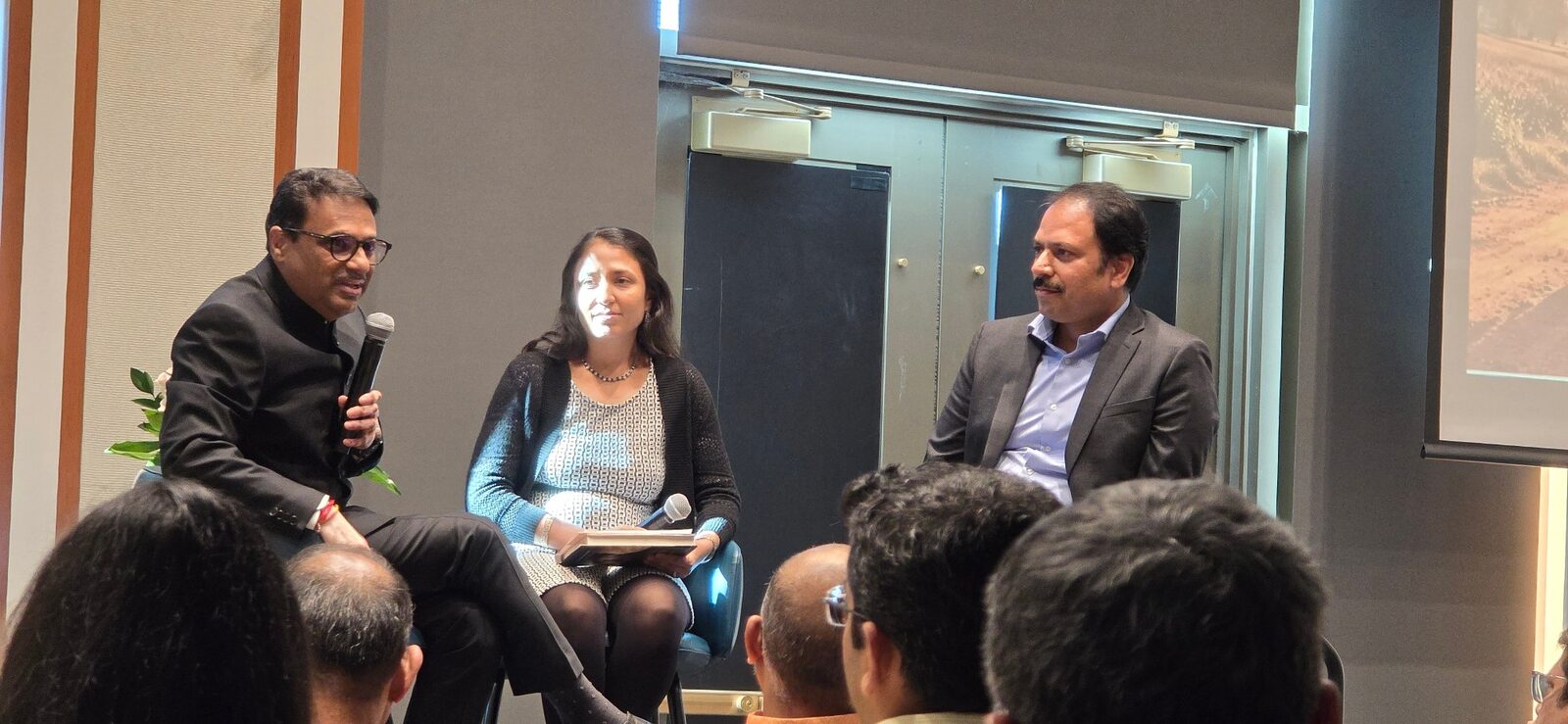
At the launch of my memoir, The Eleventh Kilometer, I stood before a room filled with family, friends, neighbors, and members of the community that has become my home.
As the applause rose, I thought of my father walking eleven kilometers to school in Vattem, Telangana.
I was the one receiving the claps. But somewhere within me, I felt they belonged to his walk.
His pursuit of an education opened a path that eventually carried me much farther from home than either of us could have imagined. Standing in a library in Carmel, Indiana, I felt how far it was from a dirt road in Vattem, and how directly one had led to the other.
The night before the launch, Dr. Tej Pareek recited a poem he had written, giving voice to the longing for home felt by so many Pravasi Bharatiyas. Its refrain stayed with me:
हमको अपने ही वतन में अप्रवासी वो बुलाते
To me, the line expresses a painful feeling: even in our own homeland, we are seen as outsiders.
It also brought a question into focus: Who really is a Pravasi?
Is it someone who crosses an ocean? Someone who moves to another state? Or someone who leaves the village where they grew up and gradually discovers that returning is more complicated than going back to an address?
Perhaps my father’s walk was our family’s first experience of the distance education can create. He never crossed an ocean, but the road to school took him away from the life his village expected of him.
I have built a full life in America. I have raised a family here, worked here, formed friendships, and found purpose through service. Carmel is home. Yet that does not diminish my connection to the people and places that shaped me. Especially my parents.
Three lines from Tej Ji’s poem stayed with me:
माँ मुझे था क्यूँ पढ़ाया करने को इक दिन पराया
मैं तो तेरा लाड़ला था फिर मेरा दिल क्यूँ दुखाया
क्यों किए उपवास तूने माँगी मन्नत गढ़ के सपने
Mother, why did you educate me, only for me to become a stranger one day?
I was your cherished child—why, then, does my heart ache?
Why did you fast and make vows, weaving dreams for my future?
I hear a son’s longing in those questions. A mother prays for her child to study and build a good life. When those prayers are answered, they can take that child far from her.
I recognize myself in that tension. My education carried me away from home, first to Pilani and then to America. I am grateful for the life it gave me. But the years away also meant fewer ordinary days with Amma—fewer meals together, fewer conversations, fewer chances simply to sit beside her.
In the chapter “Ashes,” I write about how ordinary moments with Amma became precious during her illness. I traveled to India to be with her during the pandemic. I went with her to treatments and listened as she recalled her childhood, her marriage, and the life she and my father had shared. We looked through old photographs. Sometimes, she laughed. I recorded several of our conversations, preserving a voice I would later long to hear again.
Yet I was not there when she took her last breath. Having been present for so much did not take away the pain of missing that moment.
Before her cremation, I leaned close to whisper my goodbye.
“Amma.”
The rest of the words would not come.
She was our inti Lakshmi, the presence who held our home and family together. At the launch, I wanted her there for the simple reason that a child, at any age, wants to share something meaningful with his mother.
I wanted her to see the room.
Another stanza of Tej Ji’s poem put words to what I felt in that room:
तूने मुझको जो सिखाया मैंने वो सब कुछ लुटाया
पर तेरी सब रहमतों का कर्ज अब तक ना चुकाया
मैं नहीं हक़दार जिसका भोगता हिस्सा मैं उसका
मान और सम्मान तुझ बिन कुछ नहीं मुझको सुहाते
All that you taught me, I have given freely,
yet I have never repaid the debt of your kindness.
I enjoy a share of what I did not earn.
Without you, no honor or respect brings me joy.
That share was the applause. What I have accomplished rests on the opportunities my parents created and the care they gave. I have tried to pass on what they taught me, to value education, to work hard, to show up for others, to my children, to the community here, and now through this book. But passing it on is not the same as paying it back. That debt stays open.
The final stanza of Tej Ji’s poem touched another memory:
तन यहाँ है मन वहाँ है लौटना इक दिन जहाँ है
देह अपनी राख कर सब घाट गंगा के ही जाते
My body is here, but my heart is there, where one day I must return.
When the body becomes ashes, we make our way to the ghats of the Ganga.
I had stood at that riverbank beside my brothers, holding a small clay pot with what remained of our mother. It felt heavier than I expected. As her ashes disappeared into the current, I felt the love that remained—in my brothers beside me, in her sixty years with my father, and in the lives she had held together.
In “Sixty Years,” I write about losing Nanna, our father, just nine months later. Without her, the man whose energy had filled our home grew quiet. Then came his diagnosis of brain cancer. My brothers and I sat beside him, rubbed his feet, played his favorite music, and told him stories he had once told us. This time, I was beside him when his last breath came. We held hands and recited the Purnamadah mantra.
Then we took him home to Vattem. People lined the road for his final journey. For thirteen days, four brothers whose lives had taken them in different directions stayed together under the roof he had built.
Listening to Tej Ji’s poem, I thought back to those thirteen days. Vattem was still home, but I had returned as someone whose everyday life was elsewhere. Returning brought me back to my parents. After their deaths, it brought me closer to understanding them.
The question of who is a Pravasi has no simple answer for me. I belong to the life I have built here. I also carry the home I came from, including the people I can no longer return to. For me, being a Pravasi means living with both gratitude and longing—loving where I am while still missing the voices that once made another place home.
That afternoon, as the room applauded, I thought of a boy in rural Telangana, walking eleven kilometers to school.
I wished he could have heard them.
Accompanying Poem
प्रवासी — by Dr. Tej Pareek
गाँव घर सब छोड़ डाले कुछ कमाने को निवाले
भारी मन से करके निकले माई को भाई हवाले
छोड़ कर पहचान अपनी तोड़ कर रिश्तों की टहनी
पालते मन में वतन को हम रिवाज़ों को निभाते
हमको अपने ही वतन में अप्रवासी वो बुलाते
माँ मुझे था क्यूँ पढ़ाया करने को इक दिन पराया
मैं तो तेरा लाड़ला था फिर मेरा दिल क्यूँ दुखाया
क्यों किए उपवास तूने माँगी मन्नत गढ़ के सपने
अब तेरी ही प्रार्थनाओं के दिये मुझको रुलाते
हमको अपने ही वतन में अप्रवासी वो बुलाते
अपने घर का चौक कौना याद आता वो बिछौना
माँ तेरे आँचल के आगे लगता सब मुझको है बौना
हमने अपनी नींद खो कर चाहे पाये सपनों के घर
रेशमी चादर पलंग भी अब नहीं मुझको सुलाते
हमको अपने ही वतन में अप्रवासी वो बुलाते
प्यार छूटा यार छूटे और कई संबंध टूटे
जब समय पर आ ना पाया भाई भाभी मुझसे रूठे
याद में उनकी तड़पता फ़र्क़ उनको कुछ ना पड़ता
जो मेरे थे वो मुझी से आज चेहरा क्यों चुराते
हमको अपने ही वतन में अप्रवासी वो बुलाते
तूने मुझको जो सिखाया मैंने वो सब कुछ लुटाया
पर तेरी सब रहमतों का कर्ज अब तक ना चुकाया
मैं नहीं हक़दार जिसका भोगता हिस्सा मैं उसका
मान और सम्मान तुझ बिन कुछ नहीं मुझको सुहाते
हमको अपने ही वतन में अप्रवासी वो बुलाते
माँ तेरी मिट्टी को छोड़ा पर किया ना मन का सौदा
अब भी आँगन में सजाते नीम और तुलसी का पौधा
तन यहाँ है मन वहाँ है लौटना इक दिन जहाँ है
देह अपनी राख कर सब घाट गंगा के ही जाते
हमको अपने ही वतन में अप्रवासी वो बुलाते
Get notified of new essays
No spam. Unsubscribe any time.